
Your garage door is reversing before it hits the ground because its built-in safety system is detecting a real or perceived obstruction and triggering an automatic reversal. This is not a random malfunction. It is a deliberate response from your door’s protection mechanism, and something in that system is either misfiring or pointing to a genuine mechanical problem. If you live in Durham, NC, the good news is that most of the causes behind this frustrating behavior are diagnosable and fixable without replacing the entire door system.
Let us walk through every common cause, what it looks like in practice, and how a qualified technician handles it the right way.
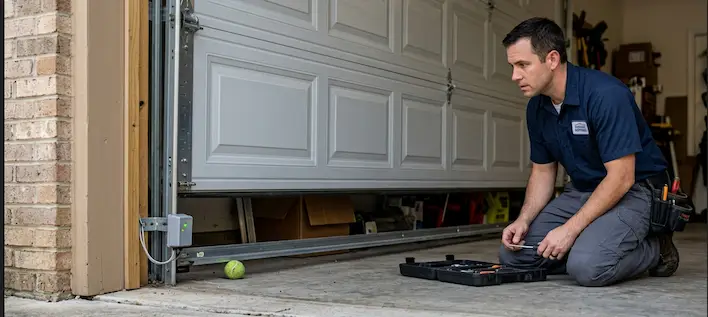
Why Your Garage Door Has a Reversal Feature in the First Place
Since January 1, 1993, federal safety regulations under 16 CFR Part 1211 have required all residential garage door openers sold in the United States to include entrapment protection, which typically takes the form of photo eye sensors and auto reverse technology. These features exist to prevent the door from closing on a person, a pet, or a vehicle.
The problem is that these safety systems are sensitive by design. When something in the mechanical, electrical, or environmental environment throws them off, they behave as if there is danger even when there is none. Understanding which part of the system is responding incorrectly is the key to fixing it.
The Most Common Causes of Garage Door Reversal Before Hitting the Ground
1. Misaligned or Dirty Photo Eye Sensors
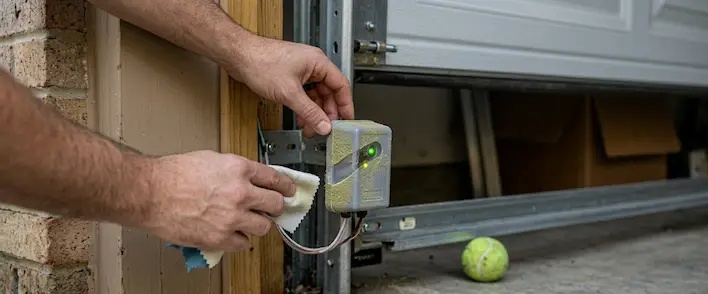
This is the number one reason a garage door reverses before reaching the floor, and it accounts for the majority of service calls in Durham. Two small sensors sit near the base of each track, facing each other and projecting an invisible infrared beam across the door’s path. When this beam is interrupted or the sensors cannot “see” each other clearly, the opener assumes something is in the way and reverses the door.
In Durham’s climate, this issue is especially common. Dust, pollen (which the Triangle produces in abundance each spring), and humidity can coat the sensor lenses and break the beam without any actual obstruction. Vibration from the opener motor can also gradually shift the sensors out of alignment over months of use.
Signs your sensors are the problem: one sensor light is dim or flickering, the door only closes when you hold down the wall button (which bypasses the sensors), or the door reverses at the same spot every time.
A simple lens wipe with a dry cloth sometimes resolves this. Realigning the sensors until both indicator lights glow solid, rather than blinking, is the next step. If the wiring behind the sensors is frayed or the brackets are bent, a professional replacement is needed.
2. Incorrect Close Force Settings on the Opener
Your garage door opener constantly monitors how much resistance it encounters while closing. If it senses more resistance than its programmed threshold allows, it interprets that resistance as an obstacle and reverses. When the close force setting is calibrated too low, even minor friction from dirty rollers, stiff weatherstripping, or seasonal temperature changes can trigger a false reversal.
This is particularly relevant in Durham during summer months when heat and humidity cause metal components to expand slightly and rubber seals to stiffen. A door that closed perfectly in March may start reversing in July simply because the conditions have shifted and the force setting is no longer accurate for the door’s current operational demands.
Adjusting this setting requires following the manufacturer’s specifications for your opener model, whether that is a LiftMaster, Chamberlain, Genie, or another brand. After any adjustment, the door must be tested with a 2×4 block of wood placed flat on the ground beneath it. The door should reverse on contact with the wood. If it does not, the force is set too high and that creates a safety hazard.
3. Travel Limit Settings That Are Off
The travel limit tells your opener how far down the door must travel before stopping. If this limit is programmed to send the door slightly past where the floor actually is, the opener keeps pushing after the door has already made contact with the ground, generates resistance from the concrete, reads that resistance as an obstruction, and immediately reverses.
This produces a very specific pattern: the door appears to reach the floor and then immediately bounce back up as if it hit something. If this is what you are seeing, a travel limit miscalibration is the likely culprit. Older openers adjust limits with physical screws on the motor unit. Newer models use digital buttons or app interfaces.
4. Worn or Broken Springs
Garage door torsion springs and extension springs counterbalance the weight of the door, making it light enough for the opener motor to lift and lower it with minimal effort. When springs lose tension or break, the door becomes significantly heavier than the opener was designed to handle. The motor pushes down, meets abnormal resistance from the unbalanced door, hits its force threshold, and reverses.
Durham’s humid subtropical climate, with its hot summers, frequent thunderstorms, and moisture in the air year round, accelerates spring corrosion. Spring failures are among the most common issues reported in the Triangle area, particularly in systems that have been running on original hardware for more than five years.
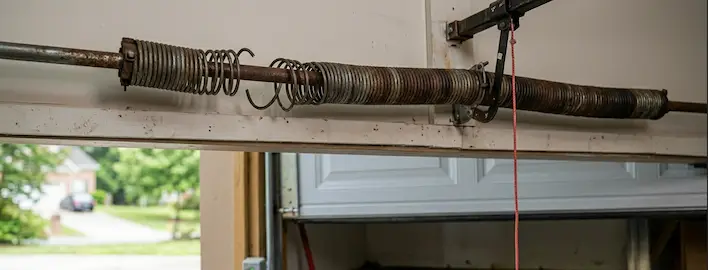
Testing whether your springs are the issue is straightforward. Disconnect the opener using the red emergency release cord and try to lift the door manually to about waist height, then let it go. A properly balanced door stays in place. If it drops quickly, the springs are losing tension and your opener is fighting that loss on every close cycle.
Springs are under extreme tension and should never be adjusted or replaced as a DIY project. A spring under load can snap and cause serious injury. This is a job for a licensed technician.
5. Debris, Damage, or Buildup at the Threshold
The area where your garage door seal meets the ground is more sensitive than most homeowners realize. Even a small pebble, a rolled piece of weatherstripping, a cluster of leaves, or pooled water after one of Durham’s frequent summer thunderstorms can be enough to trigger a reversal. During an Emergency Garage Door Repair Wichita KS visit, technicians often find that the door touches this material, the opener senses resistance it did not expect, and it reverses.
During winter months, though Durham rarely sees heavy ice or snow compared to the upper Midwest, light freezing at the threshold can cause the bottom seal to stick to the concrete. When the motor begins to close the door, it encounters this adhesion, reads it as an obstacle, and reverses.
Clearing the threshold, inspecting and replacing a damaged bottom seal, and ensuring the concrete at the base is level are all steps that address this cause.
6. Track Misalignment or Damaged Rollers
Garage door rollers ride inside vertical and horizontal tracks that guide the door through its travel path. If a track is bent, a bracket has come loose, or a roller has cracked or seized, the door experiences increased friction during closing. That friction registers as resistance, and if it exceeds the opener’s force tolerance, the door reverses.
In Durham, this type of wear is common in older systems where the original steel rollers have never been replaced. Nylon rollers are quieter and more durable. Tracks can also warp slightly from humidity, especially in garages with poor ventilation.
Checking tracks visually for gaps, bends, or debris, and listening for grinding or scraping sounds during door travel, helps identify this problem. Minor track issues can sometimes be addressed by tightening loose bracket hardware. Bent tracks generally require professional straightening or replacement.
7. Sunlight Interference with Sensors
This one catches homeowners off guard. During certain times of day, particularly in the early morning or late afternoon, direct sunlight can shine into the receiving sensor and overwhelm its ability to read the infrared beam from the sending sensor. The opener interprets this as a broken beam and reverses.
If your garage door reverses before hitting the ground only at specific times of day and the problem disappears in different lighting conditions, sunlight interference is a strong possibility. Temporarily shading the receiving sensor with a piece of cardboard and observing whether the reversal stops confirms the cause. A technician can adjust the sensor angle slightly downward to eliminate the problem permanently.
8. Logic Board or Motor Issues in the Opener
Less common but worth noting for older systems: a failing RPM sensor inside the opener can cause the door to stop after moving only a few inches, making the opener behave erratically. A damaged logic board from a power surge or lightning strike (and Durham gets its share of thunderstorms) may cause unpredictable reversals that have no obvious external cause. These failures require diagnostic tools and component replacement by a qualified technician.
Durham, NC Specific Factors That Make This Problem More Frequent
Durham sits in the North Carolina Piedmont with a humid subtropical climate. The summers are hot and muggy, the springs bring heavy pollen, and the area experiences frequent afternoon thunderstorms from late spring through early fall. This environment is harder on garage door hardware than most homeowners appreciate.
Humidity causes metal components to corrode faster, rubber seals to degrade and harden, and wooden door panels to swell and shift. Pollen coats sensor lenses quickly during spring months. Power fluctuations from summer storms can damage opener circuit boards and affect limit and force calibrations. All of these factors mean that garage doors in the Bull City need more attentive maintenance than doors in drier climates.
Neighborhoods throughout Durham, from Trinity Park and Watts-Hillandale to Hope Valley and Research Triangle Park adjacent communities, see these issues regularly, especially in homes where the garage door system has not been professionally inspected in several years.
What a Professional Technician Does to Fix a Reversing Garage Door
When you call a qualified garage door technician in Durham, a proper service visit involves more than a quick visual check. Here is what the diagnostic and repair process looks like for this specific issue.
The technician begins by observing the door’s behavior through a full close cycle to identify at what point the reversal occurs and under what conditions. They check both sensor lights for steady illumination and inspect the beam alignment with a testing object. They examine the sensor lenses, wiring, and mounting brackets for damage or misalignment.
Next, they test the door’s balance by disconnecting the opener and lifting the door manually, assessing spring tension and counterbalance performance. They inspect rollers, tracks, hinges, and cables for wear, damage, or binding. They examine the threshold and bottom seal for debris or damage that might be causing false resistance readings.
From there, they check the opener’s close force and travel limit settings against the manufacturer’s specifications and recalibrate as needed. If the opener shows signs of logic board damage or sensor failure that cannot be corrected through adjustment, they provide a recommendation for component repair or replacement.
After the repair, they test the door multiple times with a 2×4 flat on the ground to confirm that the auto reverse safety feature is working correctly. A door that does not reverse on contact with the board after force calibration is a safety liability, and a responsible technician will not leave without confirming this test passes.
When the Problem Requires Parts Replacement
Some causes behind a reversing door require professional part replacement rather than adjustment. Broken torsion springs, damaged photo eye sensors with compromised wiring, cracked or seized rollers, bent tracks, and failed opener circuit boards all fall into this category. Attempting to replace springs especially without professional training and proper tools is genuinely dangerous given the tension these components carry.
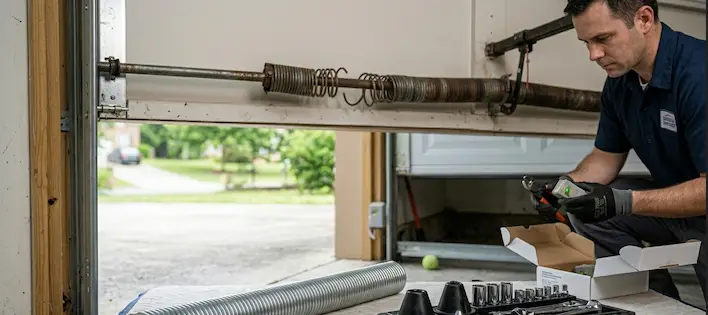
In Durham’s climate, spring replacement is one of the most frequently requested services given how quickly humidity accelerates corrosion on spring coils. Upgrading to galvanized or coated springs during replacement is a worthwhile step for long term durability.
How Often Should You Have Your Garage Door Professionally Serviced?
For most Durham homeowners, an annual professional tune-up is the right baseline. Given the local humidity and temperature swings between summer heat and winter chill, a mid-year inspection is worth considering for doors that cycle frequently, such as those used as a primary home entrance multiple times per day.
Regular maintenance addresses the small calibrations, lubrication needs, and hardware checks that prevent bigger problems. It also keeps the safety systems, including the auto reverse feature, properly calibrated so you are not caught off guard by a door that refuses to close or reverses unexpectedly at the worst possible moment.
Frequently Asked Questions
Why does my garage door only reverse at certain times of day? Direct sunlight hitting the photo eye receiver is the most common explanation. The bright light overwhelms the sensor’s ability to read the infrared beam, triggering a false reversal. A technician can adjust the sensor angle to eliminate this.
Is it safe to keep pressing the button to force the door shut? No. If your door is reversing because a safety system has detected a problem, forcing it shut with repeated button presses or by holding the wall button bypasses that protection. It may work temporarily but does not resolve the underlying issue and creates a safety risk.
Can I adjust the force settings myself? Some homeowners successfully recalibrate force settings using their opener’s manual. However, if the adjustment is done incorrectly, the safety reversal feature may stop functioning properly. A professional calibration ensures the door closes reliably while still reversing safely when it contacts an object.
How do I know if my springs need replacing? Disconnect the opener and lift the door manually to waist height. Release it. If the door drops instead of holding position, spring tension is low and professional spring service is needed.
Does Durham’s weather really affect my garage door that much? Yes. Humidity accelerates spring corrosion, causes seals to harden, and can warp tracks on older systems. Pollen seasons in the Triangle are among the most intense in the country, and sensor lenses need more frequent cleaning here than in drier regions.
If your garage door is reversing before it hits the ground, the issue is telling you something that should not be ignored. Whether it is a sensor alignment that takes minutes to correct or a spring system that requires professional handling, addressing the root cause protects your home, your household, and the longevity of the door system itself. A qualified garage door expert in Durham, NC can diagnose the exact cause and get your door closing reliably and safely again.